
Technology has become a practical part of assisted living, helping residents remain safer, more independent, and connected with family members and care teams. The most useful tools are not necessarily complicated. Many are designed to support everyday needs such as medication routines, communication, mobility, emergency response, and health monitoring.
For residents and families in Grove City, PA, understanding how these systems work can make it easier to ask informed questions before choosing an assisted living setting or evaluating a loved one’s current care plan.
What role does technology play in assisted living?
Technology in assisted living is primarily used to support safety, organization, communication, and personal choice. It does not replace caregivers or personal interaction. Instead, it helps staff notice concerns sooner and gives residents additional ways to manage daily activities.
Common examples include:
- Emergency call systems in apartments and shared areas
- Medication reminders and electronic medication records
- Motion, door, or bed sensors
- Video visits and digital communication tools
- Electronic health records
- Fall detection devices
- Online activity calendars and transportation schedules
- Devices that support hearing, vision, or speech
The purpose should be practical rather than flashy. A useful system solves a real problem without making daily life confusing or overly monitored.
How can technology improve resident safety?
Safety technology can provide an additional layer of support if a resident falls, becomes ill, or needs assistance. Pull cords, wearable alert buttons, wall-mounted call systems, and voice-activated devices may allow a resident to request help without walking to a phone.
Some systems can identify unusual movement patterns. For example, a sensor may indicate that a resident who usually gets up several times during the night has remained in bed unusually long. A door alert may notify staff if someone leaves an area unexpectedly. These tools can be particularly helpful for residents with memory loss or mobility limitations.
Technology does not prevent every accident. Sensors can malfunction, batteries can run down, and alerts may be missed if response procedures are unclear. Families should ask how often equipment is tested, how alerts are prioritized, and what happens if the system stops working.
Can technology help residents remain independent?
Yes. Assistive technology can make routine tasks easier while allowing residents to continue doing more for themselves. Simple tools may include large-button phones, voice-controlled lights, automated reminders, digital clocks, and tablets with simplified settings.
For a resident with arthritis, voice commands may reduce the need to handle small switches or buttons. A resident with hearing loss may benefit from amplified phones, visual door alerts, or captions during video calls. Someone with limited vision may use screen magnification, text-to-speech features, or high-contrast displays.
Independence does not always mean completing every task without assistance. It may mean having more control over choices, schedules, communication, and personal routines.
How does technology support medication management?
Medication technology can reduce confusion about what should be taken and when. Depending on the setting, staff may use electronic records to document medication administration, check for changes, and identify missed doses or potential conflicts.
Some residents also use reminder devices or locked dispensers for medications they manage themselves. These systems may provide an alert when it is time for a dose and limit access to the wrong amount.
Technology is not a substitute for a medication review. Prescriptions can change after a hospital stay, a new diagnosis, or a change in appetite or hydration. Families should ask how medication changes are entered into the system and how information is shared with the resident, family members, and medical providers.
How does technology help families stay connected?
Digital communication can make family contact easier, especially when relatives live far away or cannot visit regularly. Video calls, secure messaging, shared calendars, and electronic updates may help families participate in care planning and daily life.
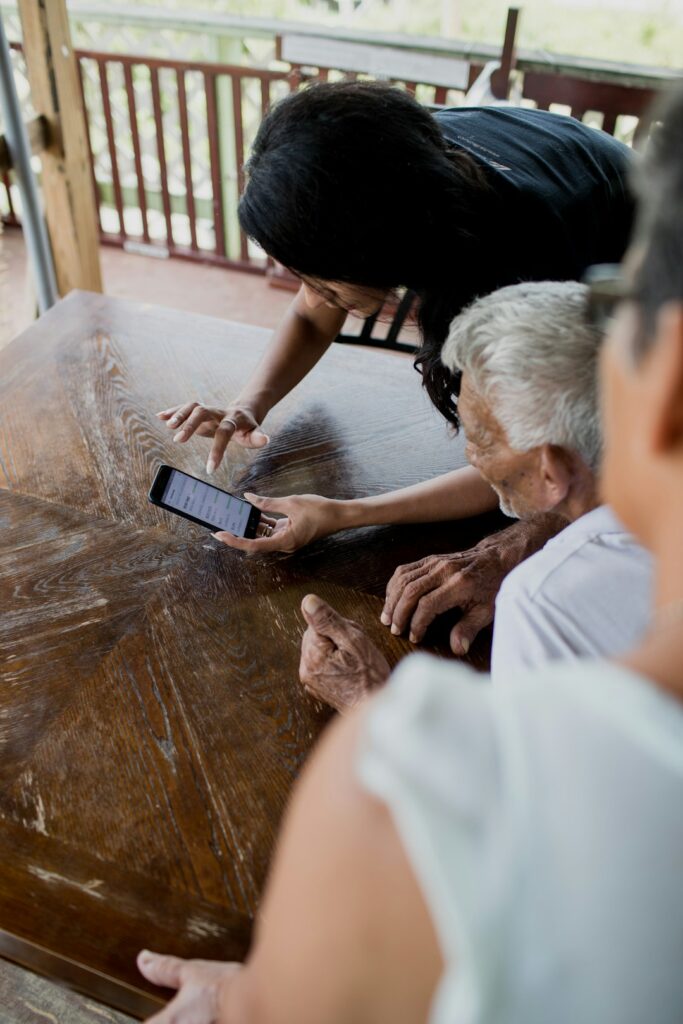
A tablet can support video visits, photographs, music, games, and access to community activities. However, not every resident is comfortable using a touchscreen. Staff assistance, written instructions, and simplified devices may be necessary.
Privacy should also be discussed. Families may want frequent updates, but residents have rights to personal privacy and control over who receives information. A clear communication plan can prevent misunderstandings.
What should families ask about privacy and security?
Technology often collects personal information, including health details, daily routines, medication records, and emergency contacts. Families should ask how information is protected and who can access it.
Useful questions include:
- What information does the system collect?
- Who is allowed to view it?
- How are passwords and user accounts managed?
- Are residents told when monitoring devices are in use?
- Can a resident or legal representative request access to records?
- What happens if information is sent to the wrong person?
- How does the setting respond to a cybersecurity problem?

Privacy also applies to cameras and monitoring devices. A safety system should be explained in plain language, and monitoring should be limited to what is reasonably needed for care and protection.
Does technology replace human caregivers?
No. Technology can support observation and communication, but it cannot replace judgment, compassion, or personal knowledge of a resident. A device may show that a door opened, but it cannot explain whether the resident was looking for a familiar object, feeling anxious, or attempting to join an activity.
Residents benefit from caregivers who notice changes in mood, appetite, speech, walking ability, and social behavior. Those observations often provide important information that a sensor cannot capture.
Families should be cautious about any care approach that treats technology as a complete substitute for regular human contact.
What technology challenges should residents expect?
The main challenges are usability, reliability, cost, and adjustment. A device may be helpful for one resident but frustrating for another. Hearing, vision, memory, dexterity, and comfort with technology all affect whether a tool is practical.
Seasonal conditions can also affect routines in the area. During icy weather, power interruptions, or heavy snowfall, residents may rely more heavily on emergency communication systems, backup power, and reliable phone access. Families can ask whether critical systems have battery backups and what procedures are followed during an outage.
Technology should also be reviewed as a resident’s needs change. A reminder that worked well six months ago may no longer be enough after a medication change, fall, or cognitive decline.
How can families evaluate whether a technology program is useful?
The best question is not whether a setting has advanced technology. The better question is whether the technology improves care without reducing dignity or personal choice.
Families can ask:
- Which systems are used every day?
- What happens when an alert is triggered?
- How quickly are alerts answered?
- Is staff training repeated when systems change?
- Can residents opt out of nonessential monitoring?
- Are there backup procedures for equipment failure?
- How are residents taught to use devices?
- Does technology support activities and social connection, or only emergency response?
A balanced assisted living environment uses technology quietly and purposefully. It should help residents feel more secure, support caregivers with useful information, and preserve opportunities for independence and human connection.
